
Introduction
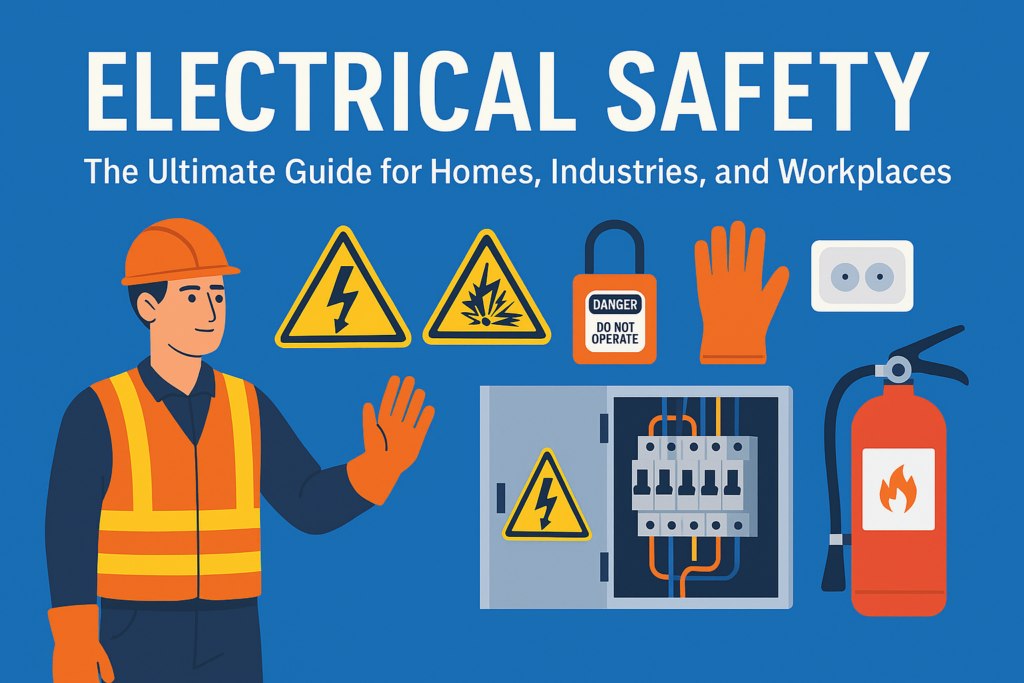
Electrical safety isn’t optional—it’s lifesaving. Whether you’re at home, in a commercial facility, or working in a high-voltage industrial plant, the risks from electrical energy are real: shocks, burns, arc flash, equipment damage, and fires. This ultimate guide explains essential principles, standards, and practical steps you can apply today to prevent incidents and ensure compliance.
Quick takeaways: Identify hazards, control energy, use rated PPE, follow procedures, and maintain systems proactively.
1. What Is Electrical Safety?
Electrical safety is the set of practices, controls, equipment, and standards designed to prevent electrical hazards from causing harm to people, assets, and the environment.
Core objectives:
- Prevent electric shock and electrocution
- Control arc flash/arc blast risk
- Eliminate ignition sources that can lead to fires or explosions
- Ensure regulatory compliance and reliable operations
2. Common Electrical Hazards
- Electric shock: Contact with energized parts, faulty insulation, damaged cords, or improper grounding.
- Arc flash & arc blast: Sudden energy release during a fault can cause extreme heat, pressure waves, and shrapnel.
- Overcurrent/overload: Excess current can overheat conductors and equipment.
- Faulty wiring and poor terminations: Loose connections, undersized conductors, and corroded terminals raise risk.
- Wet environments: Water lowers resistance and increases the likelihood of shock.
- Exposed live parts: Missing covers or improper access can lead to contact injuries.
3. Electrical Safety Standards & Codes
While specifics vary by country, these frameworks are widely referenced:
- NFPA 70E (Electrical Safety in the Workplace): Risk assessment, arc flash labeling, PPE categories, boundaries, and procedures.
- NEC / IEC electrical codes: Installation rules for safe wiring and equipment selection.
- OSHA-like workplace regulations: Employer responsibilities, training, lockout/tagout, recordkeeping.
- Company procedures: Site-specific standards for permits to work, isolation, and testing.
Action: Maintain a standards register and align your site procedures with recognized frameworks. Keep them updated and train personnel regularly.
4. Electrical Safety in Homes
- Appliances & cords: Replace damaged cords, avoid running under rugs, and don’t daisy-chain power strips.
- GFCIs/RCDs: Install ground-fault protection in bathrooms, kitchens, outdoor areas, and near water sources.
- Childproofing: Use tamper-resistant receptacles, outlet covers, and cable management.
- Load management: Don’t overload circuits; distribute high-wattage devices across circuits.
- When to call a professional: If you see tripped breakers, burning smells, flickering lights, or warm outlets.
5. Electrical Safety in Workplaces
- Lockout/Tagout (LOTO): De-energize, lock, tag, verify zero energy, and maintain control until the work is complete.
- PPE: Arc-rated clothing, voltage-rated gloves, insulated tools, eye/face protection, hearing protection.
- Testing before touch: Prove de-energized using a tested voltage detector; verify both before and after.
- Training: Role-based training for operators, technicians, engineers, and contractors.
- Emergency response: First aid for electrical burns, CPR/AED availability, and emergency communications.
6. Industrial Electrical Safety
- High-voltage precautions: Approach boundaries, permits to work, switching procedures, and clear communication.
- Hazardous areas: Use explosion-proof equipment where flammable gases/vapors/dusts may be present.
- Maintenance: Infrared thermography, torque checks, insulation resistance testing, and breaker trip testing.
- Arc flash risk reduction: Proper coordination, maintenance of protective devices, remote switching, and arc-resistant gear.
7. Preventing Electrical Fires
- Design: Correct conductor sizing, protective device settings, and selective coordination.
- Inspection: Identify hot spots, loose terminations, damaged insulation, and moisture ingress.
- Protection: Smoke/heat detection, clean agent suppression where appropriate, and proper cable management.
- Documentation: Update single-line diagrams and asset registers; label panels and feeders.
8. Innovations & Digital Safety
- Smart breakers & meters: Real-time monitoring, trip history, and remote diagnostics.
- IoT sensors: Temperature, moisture, and vibration monitoring for predictive maintenance.
- Renewables & EVs: DC systems, inverters, isolation transformers, and interlock logic require specific safety measures.
9. Electrical Safety Checklist (Download)
- Daily visual checks
- Monthly GFCI/RCD tests
- Quarterly thermography (industrial)
- Annual coordination and arc-flash study review
- Training refreshers and drills
10. Key Takeaways & Next Steps
Electrical safety is a system: people, procedures, PPE, and technology working together. Start with hazard identification, implement LOTO, use rated PPE, and adopt predictive maintenance.
CTA:
- Download the Electrical Safety Checklist (PDF)
- Read next: Lockout/Tagout Procedures Explained
- Read next: 10 Essential Electrical Safety Tips for Homeowners
Internal Links:
- 10 Essential Electrical Safety Tips for Homeowners
- Lockout/Tagout Procedures Explained: A Step-by-Step Guide
- Understanding Arc Flash Hazards: A Complete Guide for Electrical Safety
- Electrical Safety: The Ultimate Guide for Homes, Industries, and Workplaces