
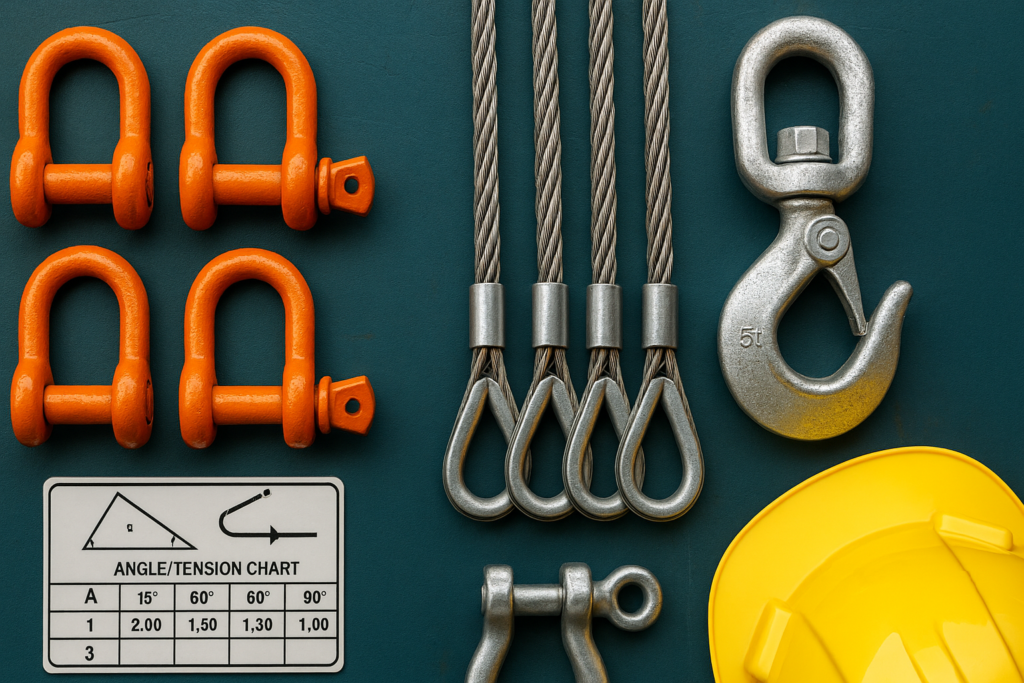
Rigging is a critical component of lifting operations in construction, industrial, and offshore environments. It involves selecting, inspecting, and using equipment such as slings, shackles, hooks, and spreader bars to safely attach loads to lifting devices. Poor rigging practices can lead to dropped loads, equipment failure, and serious injuries. This article outlines the fundamentals of rigging safety and best practices to ensure safe and efficient lifting operations.
Why Rigging Safety Matters
- Prevent Accidents: Improper rigging can cause catastrophic failures.
- Protect Equipment: Damaged rigging gear can compromise lifting integrity.
- Ensure Compliance: Regulatory standards (OSHA, ASME B30, LOLER) mandate safe rigging practices.
- Maintain Productivity: Avoid downtime caused by incidents and investigations.
Common Rigging Hazards
- Damaged or Worn Equipment: Frayed slings, bent shackles, or cracked hooks.
- Incorrect Sling Angles: Low angles increase tension and risk overload.
- Improper Hitch Selection: Using the wrong hitch type for the load.
- Unbalanced Loads: Poor load distribution causing swing or tip.
- Environmental Factors: Wind, rain, or poor visibility affecting rigging stability.
Key Principles of Rigging Safety
1. Inspect Before Use
- Check slings for cuts, broken wires, corrosion, or missing tags.
- Inspect shackles and hooks for deformation, cracks, and latch functionality.
- Verify spreader bars and lifting beams for structural integrity.
2. Understand Load and Sling Angles
- Calculate load weight and center of gravity.
- Maintain sling angles at 60° or greater to reduce tension.
- Use angle charts or calculators for multi-leg slings.
3. Select the Right Hitch
- Vertical Hitch: For straight lifts.
- Choker Hitch: For securing cylindrical loads.
- Basket Hitch: For balanced lifting of long loads.
4. Protect Rigging from Damage
- Use corner protectors on sharp edges.
- Avoid dragging slings on the ground or over abrasive surfaces.
5. Use Tag Lines Safely
- Control load swing with tag lines where permitted.
- Never wrap tag lines around hands or body.
6. Qualified Personnel Only
- Ensure riggers are trained and competent.
- Follow standard hand signals and communication protocols.
Rigging Safety Checklist
- ✅ Inspect all rigging gear before use.
- ✅ Confirm load weight and lifting points.
- ✅ Calculate sling angles and tension.
- ✅ Use appropriate hitch type.
- ✅ Protect slings from sharp edges.
- ✅ Maintain clear communication during lifts.
Emergency Preparedness
- Stop the lift if rigging integrity is compromised.
- Have a plan for dropped loads or equipment failure.
- Ensure first aid and emergency contacts are available.
Conclusion
Rigging safety is the backbone of safe lifting operations. Proper inspection, correct sling angle calculation, and adherence to best practices can prevent accidents and save lives. Remember: If in doubt, stop and reassess. Safety first, always.