
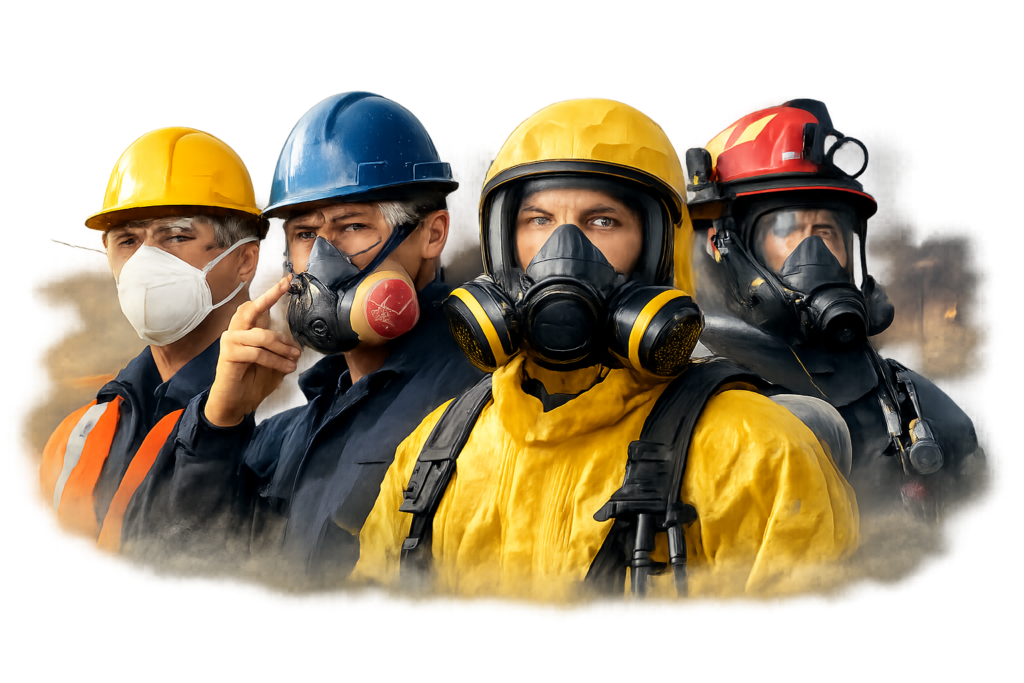
Respiratory hazards are silent, invisible, and often underestimated — yet they remain one of the leading causes of long-term occupational illness worldwide.
From toxic gases and airborne dust to biological contaminants and oxygen-deficient environments, respiratory protection saves lives when engineering and administrative controls fall short.
This pillar page serves as your all-in-one guide to respiratory protection, covering hazards, respirator types, standards, selection, common failures, and real-world best practices — all while reinforcing a strong safety culture.What
What Is Respiratory Protection?
Respiratory protection refers to the use of respirators and breathing apparatus designed to protect workers and individuals from inhaling harmful airborne contaminants or from working in oxygen-deficient environments.
It is a critical component of PPE, especially when:
- Hazards cannot be eliminated
- Engineering controls are insufficient
- Administrative controls alone do not reduce risk adequately
Key Principle:
A respirator is only effective when it is properly selected, fitted, worn, and maintained.
Why Respiratory Protection Is Critical
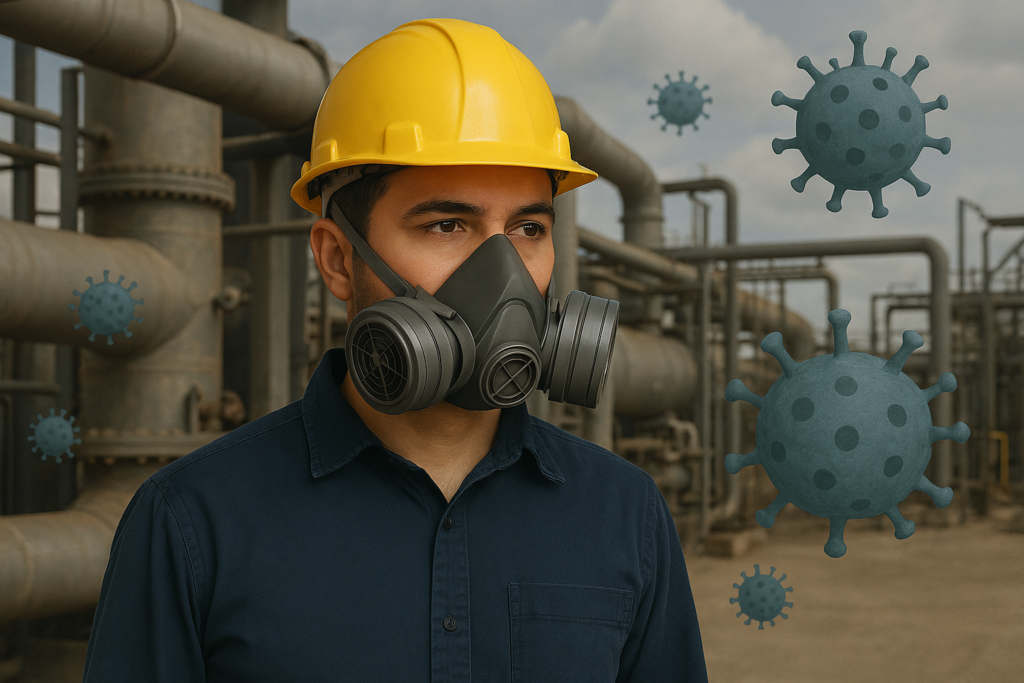
Failure to control respiratory hazards can result in:
- Occupational asthma
- Silicosis
- Asbestosis
- Chronic Obstructive Pulmonary Disease (COPD)
- Chemical poisoning
- Long-term lung damage
- Fatal exposure High-Risk
High-Risk Industries Include:
- Oil & Gas
- Construction
- Mining
- Manufacturing
- Welding & Fabrication
- Agriculture
- Healthcare
- Confined space operations
Common Respiratory Hazards
1. Dust
Examples: Silica, cement, coal, grain dust
Risk: Lung scarring, silicosis
2. Fumes
Examples: Welding fumes, metal vapors
Risk: Metal fume fever, neurological damage
3. Gases
Examples: Hydrogen sulfide (H₂S), carbon monoxide
Risk: Asphyxiation, immediate fatality
4. Vapors
Examples: Solvents, fuels, paints
Risk: Organ damage, cancer risk
5. Biological Agents
Examples: Bacteria, viruses, mold spores
Risk: Infections, respiratory disease
Types of Respirators Explained
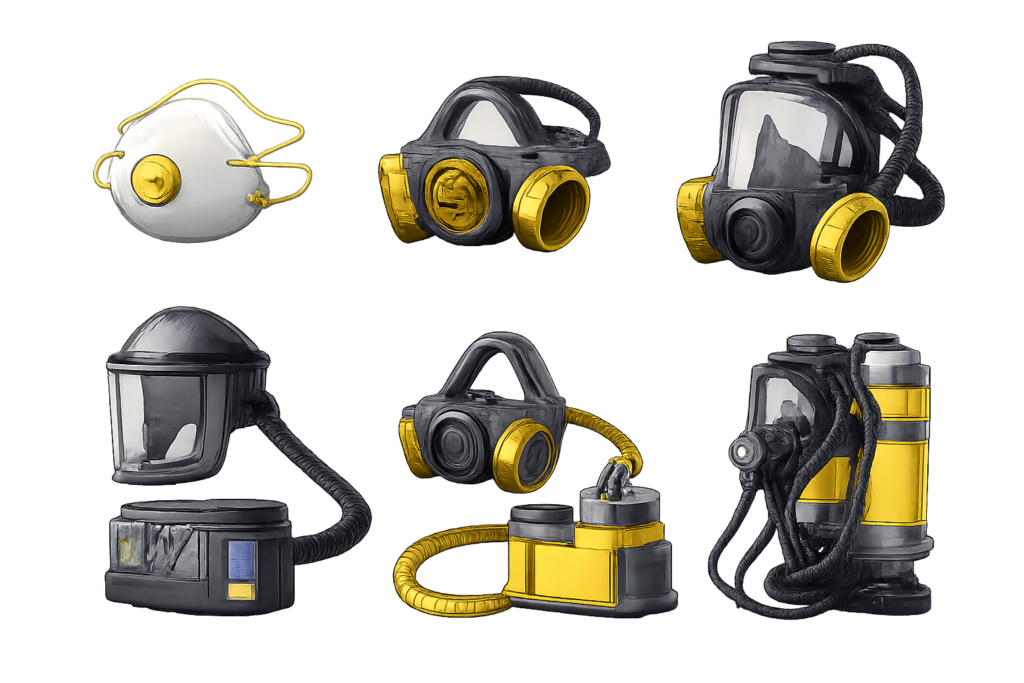
1. Filtering Facepiece Respirators (FFR)
- Disposable (e.g., N95
- Protect against particulates only
- No protection against gases or oxygen deficiency
2. Half-Mask Respirators
- Reusable
- Uses replaceable filters/cartridges
- Requires proper fit testing
3. Full-Face Respirators
- Protects eyes and face
- Higher protection factor
- Suitable for higher-risk environments
4. Powered Air-Purifying Respirators (PAPR)
- Battery-powered airflow
- Reduced breathing resistance
- Ideal for extended use and high comfort
5. Supplied-Air Respirators (SAR)
- Clean air supplied from external source
- Used in highly contaminated areas
6. Self-Contained Breathing Apparatus (SCBA)
- Independent air supply
- Used in emergency response and confined spaces
- Maximum level of respiratory protection
Respiratory Protection Program (RPP)
A respirator alone is not enough. Every workplace must implement a Respiratory Protection Program that includes:
- Hazard assessment
- Respirator selection
- Medical evaluation
- Fit testing
- Training & competency
- Inspection & maintenance
- Record keeping
No program = No protection
Fit Testing: Where Most Failures Happen
An ill-fitting respirator provides a false sense of safety.
Types of Fit Testing:
- Qualitative Fit Test (QLFT) – Pass/Fail (taste/smell)
- Quantitative Fit Test (QNFT) – Measures leakage numerically
Fit testing must be repeated:
- Annually
- After facial changes (weight loss/gain, surgery)
- When changing respirator models
Common Respiratory Protection Mistakes
❌ Wearing the wrong respirator
❌ Skipping fit testing
❌ Facial hair interfering with seal
❌ Using expired cartridges
❌ Poor maintenance and storage
❌ Using respirators as first control instead of last
Remember: PPE is your last line of defense, not your first.
Respiratory Protection at Home
Respiratory risks are not limited to workplaces.
Common home hazards include:
- Dust from renovations
- Paint and solvent vapors
- Mold exposure
- Pesticide spraying
- Generator exhaust fumes
Homeowners and DIYers should adopt the same safety mindset as industrial workers.
Safety Culture Reminder (Behavioral Insight)
When workers skip respiratory protection, it’s often due to:
- Discomfort
- Poor training
- Time pressure
- Risk normalization
Strong safety culture turns PPE from an option into a habit.
🛡️ Safety Message Apparel
“Your lungs don’t grow back. Wear your respirator.”
👉 Shop Respiratory Safety T-Shirts & Hoodies
📢 Safety Culture Designs
“No Mask. No Task.”
👉 View Safety Posters, Shirts & Stickers
🏠 Home & DIY Safety Collection
“Dust Today. Disease Tomorrow.”
Frequently Asked Questions (FAQ)
Is an N95 the same as a respirator?
Yes — but it only protects against particulates, not gases or vapors.
Can I reuse disposable respirators?
Only if manufacturer guidance allows it and contamination is minimal.
Does facial hair affect respirator effectiveness?
Yes. Facial hair breaks the face seal and invalidates protection.
Are respirators required by law?
In many jurisdictions, yes, when respiratory hazards are present.
Final Safety Takeaway
- Respiratory protection is not optional.
- It is a life-preserving system that demands knowledge, discipline, and consistency.
- Whether in oil & gas, construction, manufacturing, healthcare, or at home — the air you breathe determines the life you live.
📌 Related Safety Guides
- Respiratory Protection: The Ultimate Guide for Workplace Safety
- Respiratory Protection During Wildfires and Air Pollution
- PPE: Your Last Line of Defense
- Confined Space Safety
- H₂S Awareness & Gas Detection
- Dust Control & Silica Safety
- Why Workers Skip PPE (And How to Stop It)