
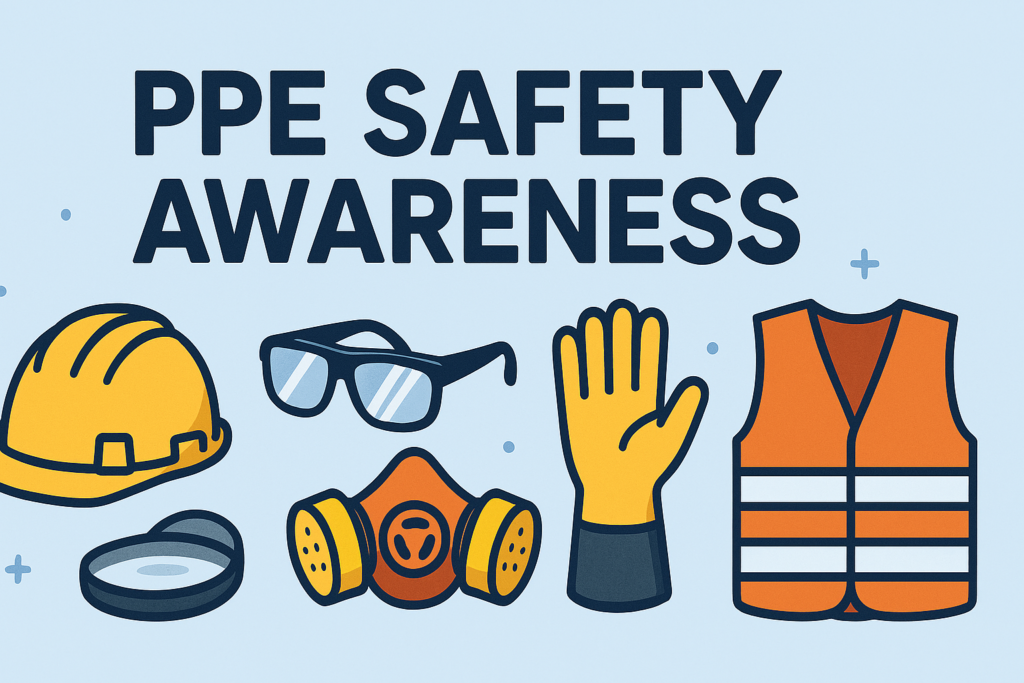
Introduction: PPE Is Not Optional — It’s Survival
Personal Protective Equipment (PPE) is often described as the last line of defense between a worker and serious injury or death. Yet across industries worldwide, PPE continues to be ignored, misused, or treated as optional.
Most workplace accidents don’t happen because people don’t know the rules — they happen because habits fail under pressure.
This page explains:
- Why PPE saves lives
- Why PPE compliance fails
- How awareness and daily reinforcement reduce accidents
- How simple safety messages can change behavior
If safety matters to you, your crew, or your family, this guide is for you.
What Is PPE and Why It Matters
PPE refers to protective clothing and equipment designed to minimize exposure to workplace hazards that cause injuries and illnesses.
PPE does not eliminate hazards, but it dramatically reduces the severity of injuries when something goes wrong.
PPE exists because:
- Humans make mistakes
- Equipment fails
- Conditions change
- Shortcuts happen
When all other controls fail, PPE is what stands between going home safely and a life-changing injury.
Why PPE Compliance Still Fails Worldwide
Despite training, rules, and supervision, PPE non-compliance remains one of the leading contributors to workplace accidents.
Common reasons PPE is ignored:
- “Just this once” mentality
- Discomfort or heat
- Overconfidence from experience
- Poor supervision
- Lack of visible reminders
- Unsafe workplace culture
PPE failure is rarely about ignorance.
It’s about behavior.
That’s why safety awareness must be visible, constant, and reinforced daily — not only during toolbox talks.
Common PPE Failures That Lead to Serious Accidents
Many accident investigations reveal the same patterns again and again:
- Helmet worn but not fastened
- Gloves removed “for better grip”
- Safety boots replaced with casual shoes
- Eye protection ignored for short tasks
- Respiratory protection skipped “just for a minute”
One small decision is often all it takes.
Most PPE-related accidents are preventable.
Types of PPE and Their Life-Saving Roles
Head Protection
Protects against falling objects, impacts, and electrical hazards.
Eye & Face Protection
Prevents permanent eye damage from particles, chemicals, sparks, and arc flashes.
Hand Protection
Reduces cuts, burns, chemical exposure, and crush injuries.
Foot Protection
Prevents fractures, puncture wounds, slips, and crush injuries.
Respiratory Protection
Protects lungs from dust, fumes, gases, and airborne contaminants.
High-Visibility Clothing
Ensures workers are seen in low-visibility or high-traffic environments.
Each piece of PPE exists because someone was injured before it became standard.
PPE and Behavioral Safety: Why Awareness Works
Rules alone do not create safe behavior.
People follow what they see, what they feel, and what is constantly reinforced.
Why visual safety messaging works:
- It acts as a subconscious reminder
- It reinforces responsibility
- It normalizes compliance
- It influences group behavior
- It creates safety identity
When safety messages are visible every day — on walls, signs, or clothing — compliance improves naturally.
PPE Safety Awareness Apparel: More Than Clothing
PPE rules are often forgotten.
Messages are remembered.
Safety awareness apparel works because it:
- Reinforces PPE culture
- Signals leadership commitment
- Creates peer accountability
- Keeps safety top-of-mind
Popular PPE safety messages include:
- No PPE, No Work
- Your Family Needs You – Wear Your PPE
- PPE Saves Lives
- Work Safe. Go Home Safe.
These messages are not fashion statements — they are responsibility statements.
👉 View PPE Safety Awareness Apparel on Amazon
PPE Safety for Supervisors and Safety Leaders
For supervisors and HSE professionals, PPE compliance is not about punishment — it’s about culture.
Effective PPE leadership includes:
- Leading by example
- Correcting behavior immediately
- Reinforcing rules visually
- Making safety personal
- Encouraging peer responsibility
When workers see leaders wearing and promoting PPE consistently, compliance becomes the norm.
PPE Safety Resources & Tools
Use these tools to strengthen PPE awareness:
- Daily PPE inspection checklists
- Toolbox talk discussion prompts
- PPE signage and reminders
- Safety awareness messaging
- Behavioral observation programs
Consistency saves lives.
PPE Safety Articles & Guides
Explore in-depth PPE safety topics below:
- Why Workers Skip PPE (And How to Stop It)
- Common PPE Mistakes That Turn Minor Hazards Into Major Injuries
- Why Workers Skip PPE (And How to Stop It)
- PPE Is the Last Line of Defense — Use It
- Unsafe Acts vs Unsafe Conditions Explained
- The Psychology Behind “No PPE, No Work”
- How Visual Safety Reminders Reduce Accidents
Final Safety Message
Every PPE rule exists because someone was injured — or worse.
Wearing PPE is not about compliance. It’s about going home alive.
If one safety message can make someone pause before taking a risk, it has already done its job.