

Introduction
Load lifting operations—such as those involving cranes, hoists, forklifts, and other lifting equipment—are critical in industries like oil and gas, construction, and manufacturing. These activities carry significant safety risks, making load testing an essential procedure to verify the integrity and performance of lifting equipment before it is put into service.
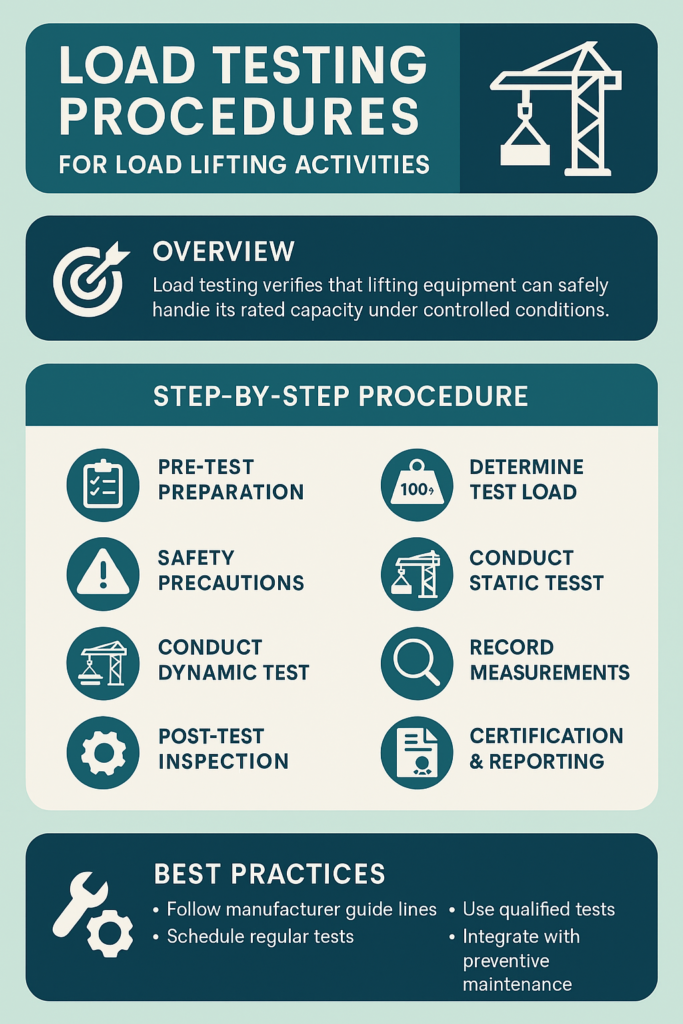
Load testing ensures that lifting devices can safely handle their rated capacity under controlled conditions. It is a legal and safety requirement in many jurisdictions and forms part of preventive maintenance and certification programs.
Objectives of Load Testing in Lifting Operations
- Verify Equipment Strength: Confirm that the lifting device can handle its rated load without structural failure.
- Ensure Safety Compliance: Meet regulatory standards such as OSHA, ASME, and local lifting regulations.
- Identify Weak Points: Detect mechanical or structural weaknesses before operational use.
- Validate Operational Controls: Ensure brakes, limit switches, and safety interlocks function correctly under load.
Types of Load Tests
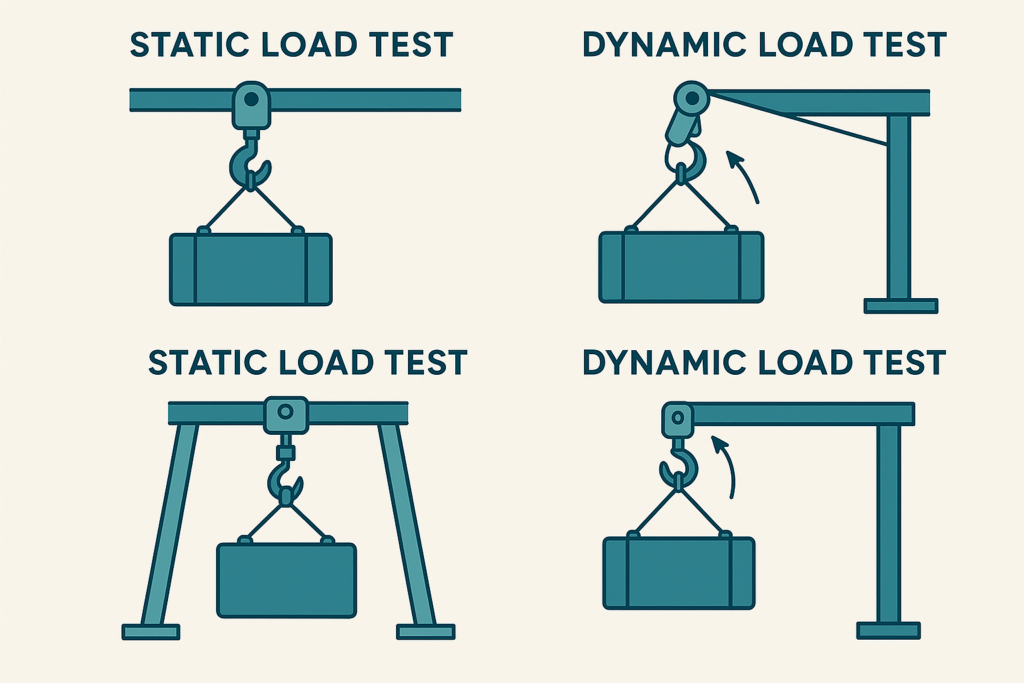
- Static Load Test
- The equipment is loaded to a specified weight (usually 100–125% of rated capacity) and held for a set duration.
- Purpose: Check structural integrity and stability.
- Dynamic Load Test
- The equipment lifts and moves the load through its full range of motion.
- Purpose: Verify operational performance under working conditions.
- Proof Load Test
- Often performed after repairs or modifications.
- Confirms that the equipment meets design specifications.
Step-by-Step Load Testing Procedure
1. Pre-Test Preparation
- Review Documentation: Check manufacturer’s load rating and maintenance history.
- Inspect Equipment: Look for visible defects, cracks, or wear.
- Verify Test Area: Ensure a clear, controlled environment with safety barriers.
- Calibrate Measuring Instruments: Load cells, dynamometers, and gauges must be accurate.
2. Determine Test Load
- Typically 100–125% of the rated capacity as per standards (e.g., ASME B30).
- Use certified test weights or water bags for large loads.
3. Safety Precautions
- Establish exclusion zones.
- Use tag lines to control load movement.
- Ensure all personnel wear PPE (helmets, gloves, safety boots).
4. Conduct Static Test
- Lift the load slightly off the ground and hold for a specified time (usually 10 minutes).
- Monitor for deflection, abnormal sounds, or hydraulic leaks.
5. Conduct Dynamic Test
- Move the load through full operational motions: lifting, lowering, slewing, and traveling.
- Check brakes, limit switches, and emergency stop functions.
6. Record Measurements
- Document load weight, duration, deflection, and any anomalies.
- Use calibrated instruments for accuracy.
7. Post-Test Inspection
- Inspect for permanent deformation, cracks, or component failure.
- Verify that all safety devices remain functional.
8. Certification & Reporting
- Issue a load test certificate with details of the test, results, and compliance status.
- Maintain records for regulatory audits and future reference.
Best Practices
- Follow Manufacturer Guidelines: Never exceed recommended test loads.
- Use Qualified Personnel: Only certified riggers and inspectors should conduct tests.
- Schedule Regular Tests: Typically annually or after major repairs.
- Integrate with Preventive Maintenance: Combine load testing with lubrication, alignment, and component checks.
Common Challenges
- Environmental Conditions: Wind, uneven ground, or poor lighting can affect safety.
- Equipment Availability: Large test weights or water bags may be hard to source.
- Human Error: Miscalculating load or improper rigging can lead to accidents.
Regulatory Standards
- ASME B30 Series
- OSHA 1910.179 (Overhead and Gantry Cranes)
- LOLER (UK) – Lifting Operations and Lifting Equipment Regulations
Conclusion
Load testing for lifting equipment is a non-negotiable safety requirement. By following structured procedures and adhering to international standards, organizations can prevent catastrophic failures, protect personnel, and maintain operational integrity.