
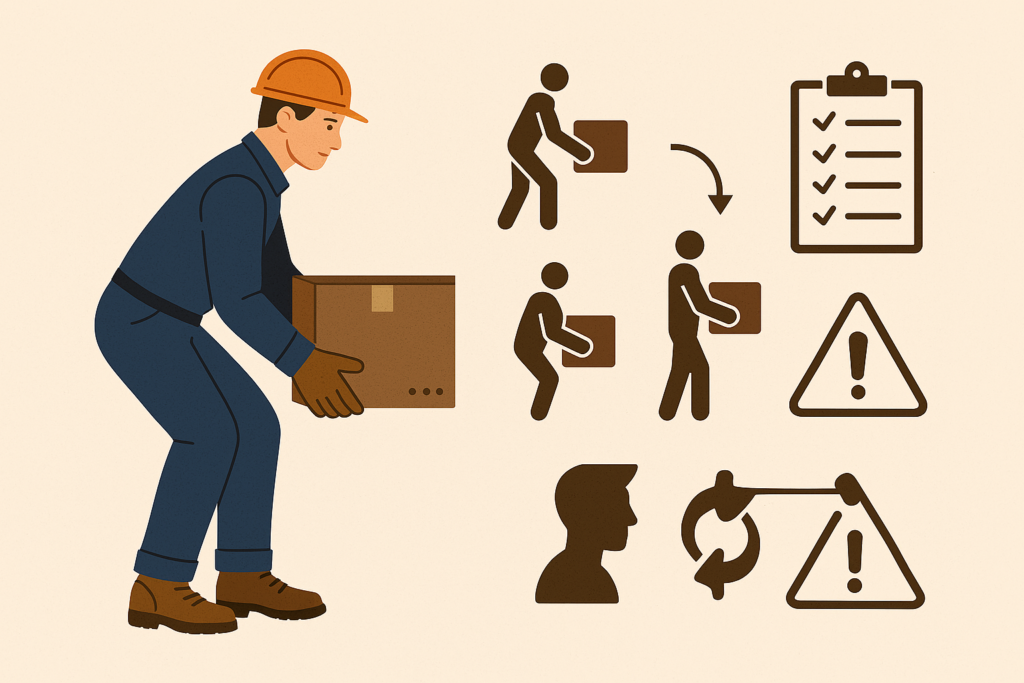
Manual handling refers to the process of lifting, carrying, pushing, pulling, or moving objects by hand or bodily force. It is a common activity in many workplaces, including manufacturing, construction, healthcare, and oil and gas operations. Poor manual handling practices can lead to musculoskeletal disorders (MSDs), injuries, and reduced productivity. Therefore, understanding and applying proper techniques is essential for safety and efficiency.
Why Manual Handling Matters
Manual handling injuries account for a significant percentage of workplace accidents globally. Common injuries include:
- Back strain
- Muscle sprains
- Herniated discs
- Repetitive strain injuries
These injuries often result from:
- Lifting loads that are too heavy
- Poor posture during lifting
- Twisting while carrying loads
- Lack of planning before moving objects
Key Principles of Safe Manual Handling
Before performing any manual handling task, follow these principles:
- Assess the Load
- Check the weight, size, and shape of the object.
- Determine if mechanical aids (trolleys, hoists) are needed.
- Test the load by gently pushing or lifting one corner.
- Plan the Lift
- Identify the route and remove obstacles.
- Ensure the destination is clear and stable.
- Ask for assistance if the load is too heavy or awkward.
- Adopt a Stable Position
- Stand close to the load with feet shoulder-width apart.
- One foot slightly forward for balance.
- Use a Good Grip
- Hold the load firmly using the whole hand.
- Avoid lifting with fingertips only.
Step-by-Step Manual Handling Technique
1. Position Yourself Correctly
- Face the load squarely.
- Keep your back straight and maintain its natural curve.
- Bend your knees, not your waist.
2. Lift Smoothly
- Tighten your core muscles.
- Use the strength of your legs, not your back.
- Avoid jerky movements.
3. Keep the Load Close
- Hold the object close to your body at waist level.
- This reduces strain on your spine.
4. Avoid Twisting
- Turn with your feet, not your torso.
- Pivot your whole body when changing direction.
5. Set Down Carefully
- Bend your knees and keep your back straight.
- Place the load gently to avoid sudden impact.
Additional Tips
- Know Your Limits: Do not attempt to lift loads beyond your capacity.
- Use Mechanical Aids: Whenever possible, use trolleys, forklifts, or hoists.
- Team Lifting: For large or heavy items, coordinate with a partner.
- Warm-Up Exercises: Stretch before handling heavy loads to prevent muscle strain.
- Wear Appropriate PPE: Gloves for grip, safety shoes for foot protection.
Common Mistakes to Avoid
- Lifting with a rounded back.
- Holding the load away from the body.
- Twisting while lifting.
- Rushing the task without planning.
Conclusion
Manual handling is an integral part of many jobs, but it comes with risks if not done correctly. By following proper techniques—assessing the load, planning the lift, and using correct posture—you can significantly reduce injuries and improve workplace safety.