
Introduction
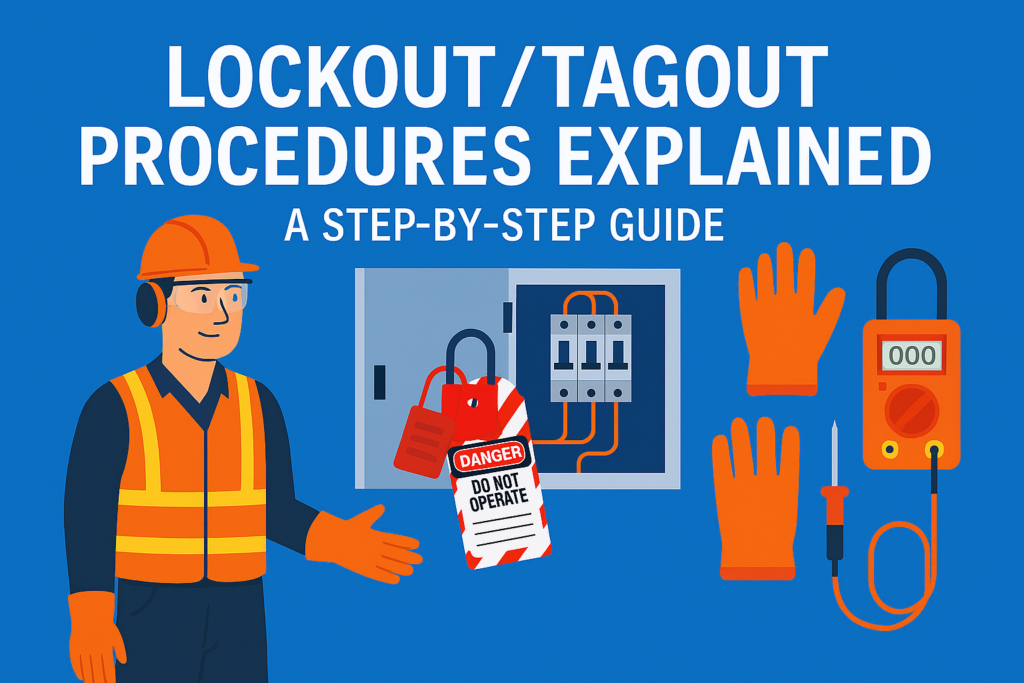
Lockout/Tagout (LOTO) prevents accidental energization during maintenance or repair. This guide explains the exact steps, roles, and documentation you need to implement a safe, compliant LOTO program for electrical systems and mixed energy sources.
1. When to Use LOTO
Apply LOTO whenever work could expose personnel to energy hazards:
- Electrical (AC/DC, capacitors, batteries, inverters)
- Mechanical (moving parts, springs)
- Hydraulic/Pneumatic (pressure systems)
- Thermal/Chemical (heat, steam, reactive substances)
2. Roles and Responsibilities
- Authorized person: Performs isolation, applies locks/tags, verifies zero energy, and conducts handover.
- Affected personnel: Informed of isolation and prohibited from restarting equipment.
- Supervisor/permit issuer: Reviews the plan, approves permits, ensures training and documentation.
- Operator/owner: Provides system knowledge, diagrams, and access.
3. Pre-Job Preparation
- Review documentation: Single-line diagrams, P&IDs, isolation points, interlocks.
- Identify energy sources: Main feeders, sub-feeders, local disconnects, UPS/inverters, stored energy (capacitors).
- Risk assessment: Shock, arc flash, switching risks, and task-specific hazards.
- PPE selection: Arc-rated clothing, face shield, gloves, hearing protection.
- Communication & boundaries: Assign radios, establish approach boundaries, and set barriers/signage.
4. Step-by-Step LOTO Procedure
Step 1: Notify and plan
Inform affected persons, agree on start/finish times, and define equipment scope.
Step 2: Shut down equipment
Follow normal shutdown procedures to avoid damage (e.g., stop motors, isolate loads).
Step 3: Isolate all energy sources
Open and secure disconnects, breakers, valves. Consider secondary sources: UPS, generators, solar PV, battery banks, control circuits.
Step 4: Apply locks and tags
Use individually keyed locks; tags must identify the authorized person, date, contact, and reason.
Step 5: Dissipate stored energy
Discharge capacitors, bleed pressure, release tension, block moving parts, secure springs.
Step 6: Verify zero energy
- Test your voltage detector on a known live source.
- Check all phases, neutral, and ground.
- Re-test detector after use to confirm functionality.
- Try start controls to confirm no response.
Step 7: Perform the work
Maintain control of keys; keep boundaries and signage in place.
Step 8: Return to service
- Inspect work area, remove tools, replace guards/covers.
- Clear personnel, remove locks/tags (by the person who applied them).
- Restore energy per procedure and communicate startup.
5. Electrical-Specific Considerations
- Arc flash boundaries & labels: Respect approach distances and PPE categories.
- Induced voltage: Long parallel runs can induce potentials—always verify.
- Backfeed risk: From generators, solar PV, VFD/DC links, and control transformers.
- Remote switching: Consider to reduce exposure; use insulated tools.
6. Documentation & Permits
- Permit to work (PTW): Scope, isolation points, PPE, risk assessment, approvals.
- LOTO log: Who applied/removed locks, times, equipment ID.
- Diagrams & labeling: Up-to-date single-lines, panel schedules, feeder IDs.
- Training records: Authorized personnel credentials and refreshers.
7. Common Pitfalls and How to Avoid Them
- Assuming one isolation point is enough → map all sources.
- No verification → always test before touch.
- Shared padlocks → use individually keyed locks.
- Poor communication → brief affected persons before and after.
- Missing covers/guards → reinstall before energizing.
8. Practical Tools & Checklists
- Personal LOTO kit: locks, tags, hasps, lockout devices, voltage detector, insulated tools.
- Pre-job briefing template
- Zero-energy verification checklist
- Handover and startup checklist
9. HSE Culture: Make LOTO Non-Negotiable
Set clear expectations: no work on energized systems unless justified and controlled under a formal energized work permit, with risk assessment, approvals, and enhanced PPE.
CTA & Internal Links
CTA: Download the LOTO Checklist & Permit Templates (PDF).
Read next:
- Electrical Safety: The Ultimate Guide
- Top PPE for Electrical Work
- Arc Flash Hazards: Causes, Risks, and Prevention